
But health department aims to help all community members navigate a complex system
By Eileen Daniel-Denmark
Photos by Sage Russell
Accessing healthcare can be complicated, and in a rural community like Pamlico County, it can sometimes feel impossible.
With no specialists, no advanced cancer care or cardiac care, no hospital and no Veterans Affairs medical center, Pamlico residents face obstacles as great or greater than anywhere in the nation when they try to access care.
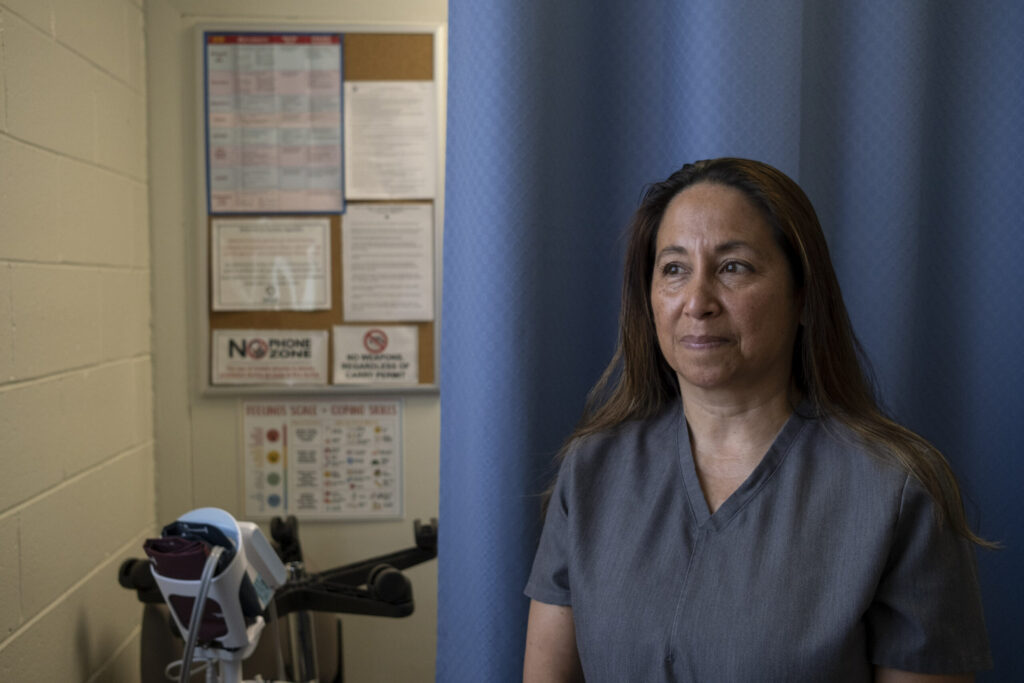
Norma Jones said it can be scary for patients. Getting people basic healthcare is a calling for Jones, who serves as a credentialed public health nurse at the Pamlico County Health Department in Bayboro.
Jones, who is a registered nurse, explained what it means for a health department or a professional to be credentialed and outlined the additional government regulations.
“It is a different beast,” she said, describing the binders and manuals they fill with paperwork. “There are a lot of different documentation requirements for specific programs.”
Jones is sitting at a conference table in a room with a large TV the health department uses for meetings and presentations. It is a Friday, the day Jones devotes to paperwork.
Asked if she heard that the head of the ECU Health system recently testified before Congress, Jones nods.
Dr. Michael Waldron is a critical care physician and CEO of ECU Health, a nonprofit serving more than 1.4 million people across the 29 counties of eastern North Carolina, including Pamlico.
In April, Waldron told lawmakers that eastern North Carolina ranks amongst the poorest and least healthy regions in the country, noting that rural systems face additional pressures, including older and sicker populations, workforce shortages and the need to provide care across large geographic areas.
Waldron also testified that 20% of every healthcare dollar spent goes toward managing the complexities of the insurance markets.
Jones said Medicaid is the health department’s primary form of payment. “We deal with all of that here,” she said.
‘A broken system’

Not knowing how to pay keeps many residents from seeking care.
The uninsured, the underinsured and those considering dropping coverage because they can no longer afford it are not nameless, faceless people. They are friends, neighbors, the servers at a favorite restaurant, caregivers and some are even in medical professions.
“I joined the military when I was 19 and have always had good insurance. … Never had to worry myself,” Jones said. “It just never occurred to me I would see all these people struggling. It’s a broken system.”
It may be broken, but the health department team is committed to doing whatever it can to assist.
Patients who are not insured and low-income can take advantage of the staff’s experience with applying for Medicaid. The staff take the time to help a patient determine eligibility and will help initiate the paperwork on site.
For the uninsured who do not qualify for Medicaid, or are waiting for their applications to be approved, there are state funds that make some services available on a sliding fee scale.
Some patients are referred to Hope Clinic, a nonprofit serving those who have fallen through the cracks, the ones who make too much money to qualify for Medicaid, but not enough to afford insurance.
Residents report health concerns
Pamlico County had a population of 12,317 in 2024, according to the department’s most recent three-year health survey.
In addition to being amongst the poorest counties in the state, one of its most significant demographic characteristics is its aging population. In Pamlico, 30.4% of residents are age 65 or older, compared to 16.7% statewide.
The county also has a notably higher concentration of veterans compared to state and national averages, comprising 12% of the population, exceeding the North Carolina average of 7.8% and the national average of 6.5%.
Community health concerns, identified by residents responding to the 2024 survey included alcohol and drug addiction, mental health, cancer, diabetes and obesity. Those concerns remain largely unchanged today.
Jones described another frequent finding. “Someone thinks they are healthy, and we find their blood pressure is so high they need to get to the hospital emergency room right away,” she said. “Hypertension is a silent illness and a lot of people don’t understand that.”
Expansion of services
To address limited access to primary care, another concern identified by county survey respondents, the health department used an evidence-based approach, including survey data, to justify expanding its services to include adult health and primary care. The new services were implemented in the spring of 2024, around the time Jones joined the department.
”A lot of people have a misconception of what public health is,” Jones said. “They hear ‘health department’ and think that’s just STD testing and birth control.”
Pamlico County Health offers an array of clinical services, plus family planning, care management via referral for high risk pregnancies, and immunizations for children who come in for supplemental nutrition services through the Women Infants and Children (WIC) program.

With expanded offerings, Jones said they are seeing a lot of retirees who are surprised to learn they are not as healthy as they thought. Many have gone years without annual physicals, routine bloodwork or EKGs.
The department is staffed and equipped to guide such patients toward better health.
Nancie Deckard, Pamlico’s nurse practitioner, spends as much time as necessary, from as little as 10 minutes to an hour or more, to get new patients a thorough assessment and put them on track with nutrition training, medication and monitoring.
Deckard also collaborates with other medical professionals, locally in Bayboro and virtually through telehealth visits with Duke, to get patients on a wellness program. She sometimes recommends weekly or monthly visits until their test results improve.
Connecting patients with doctors
Pamlico’s telehealth program was piloted by its clinical services director, Lynn Hardison. It was a first of its kind when it was established through a grant from Duke University’s nursing school, where Hardison is an adjunct instructor.
Hardison is a primary care registered nurse and, like Jones, has public health credentials. Hardison also has deep experience with the systems and technologies that enable remote connections between patients and doctors.
Raised in Pamlico county, Hardison has a vision to improve access to integrated healthcare in her community, with a focus on the underserved.
Jones credits Hardison for the department’s many collaborations and partnerships, with Duke and ECU. “She’s the reason we have telehealth and the funding opportunities for things like EKGs, A1C and cholesterol,” Jones said.
Telehealth became widely known during the COVID-19 pandemic, when the only option for many patients was a remote consultation with a doctor from their home. But the technologies and practices for remote medical visits have been evolving for decades. For example, in the 1960s NASA invested heavily in remote medical monitoring for its astronauts.
Today, at the health department, a patient and a nurse can sit together in front of a laptop in an exam room in Bayboro where the nurse facilitates a medical assessment and in some cases, a diagnosis, with a doctor at Duke. No long distance travel is required and any concern a patient may have about managing devices or tech are alleviated.
Lack of transportation
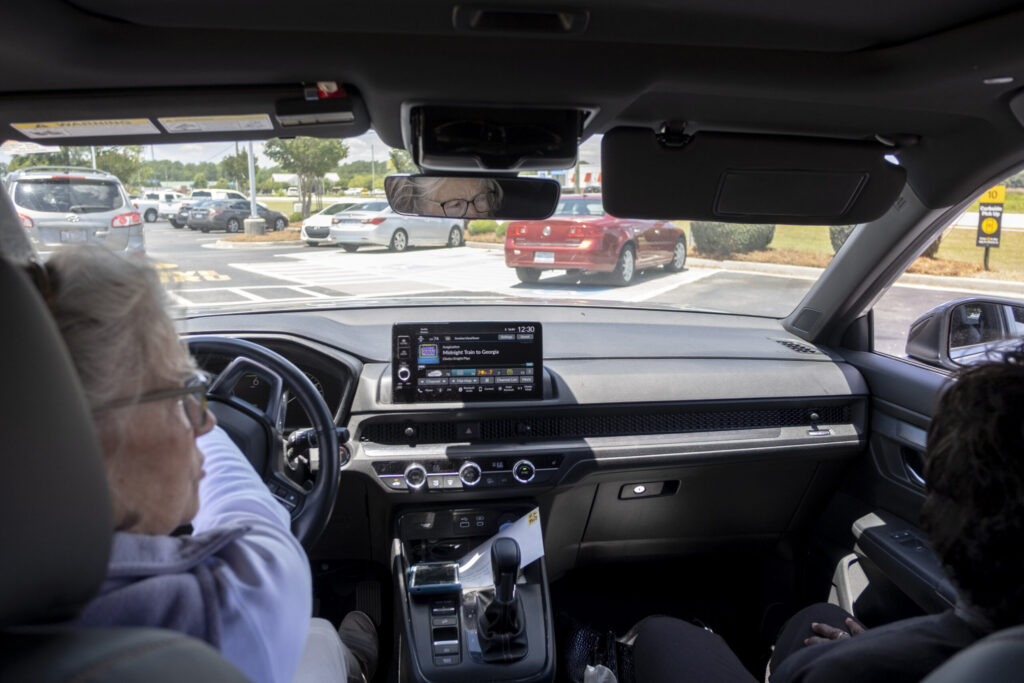
According to the 2024 health assessment, 124 households in the county lack a vehicle. Many residents rely on the Craven Area Rural Transit System (CARTS) and the Beaufort Area Transit System (BATS) to visit clinics in neighboring Craven and Beaufort counties, but these services do not deliver patients to appointments in Pamlico.
The health department can provide guidance on how a patient can get to and from nonemergency medical appointments. According to Jones, many patients are not aware that both Medicare and Medicaid offer transportation benefits.
Other organizations have recognized the need for more options.
Eastern NC Community Transport, a medical nonemergency transportation company serving Craven County has been working with Pamlico since 2024. At a recent Pamlico County Commission meeting, the company proposed a county-funded partnership to expand its offerings to include essential driving services such as grocery shopping and employment opportunities.
Vicki Rasmussen, one of the board members of the Neuse Neighbors Network, a program focused on keeping residents over 55 in their homes and maintaining their independence, said the all-volunteer organization recognizes a growing need outside the immediate Oriental area it serves.
“The No. 1 service offered by and used at Neuse Neighbors is transportation to medical appointments and other errands,” Rasmussen said, noting it lacks the number of volunteers needed for expansion.

Transportation for emergencies
Lack of transportation for nonemergency medical needs can have unintended consequences in real emergencies.
Eric Kindle is Pamlico Volunteer Station 19’s fire chief. He is also a paramedic.
“Pamlico Rescue is the lone EMS provider in the county,” Kindle explained. “They offer the best pre-hospital care and will dispatch to any medical emergency.”

Most emergency patients are transported to the hospital in New Bern, which Kindle said has an excellent 24/7 cardiac catheter lab. It is also a stroke center.
Kindle wants to make sure county residents who call 911 know responders need as complete a picture as possible to help them make decisions effectively and efficiently.
Recognizing that residents in a stressful situation may struggle to accurately assess the level of an emergency, Kindle uses a car crash as an example. “If a victim is slumped over a steering wheel unconscious versus awake and able to talk, that makes all the difference,” he said.
Trauma patients are always transported by helicopter to Greenville, which has the closest Level 1 trauma center. “It happens a fair bit,” Kindle said, emphasizing the importance of providing complete information. “It’s calling for a helicopter right away instead of driving 15 minutes to find out we should have called it immediately.”
Kindle said people also call 911 in nonemergency situations, diverting rescue trucks and emergency medical technicians from their core mission. This results in emergency medical services and the emergency room acting as de facto primary care for many in the area.
Jones wants the community to know the Pamlico County Health Department in Bayboro is here and is committed to serving everyone. “We are a huge organization as far as services, and not so well-known,” she said.