Story by Ehren Rolle
Photographs by Sage Russell
“I had tried repeatedly to get sober on my own at home by just not using the drug. … I would get severe withdrawals. I had restless legs so bad that it caused a blood clot, which could have been fatal if that blood clot had (embolized) … I had tried every abstinence avenue that I could. I had to leave the county.” — Lindsey Potter, a local substance use counselor and a Pamlico County resident recovering from addiction.
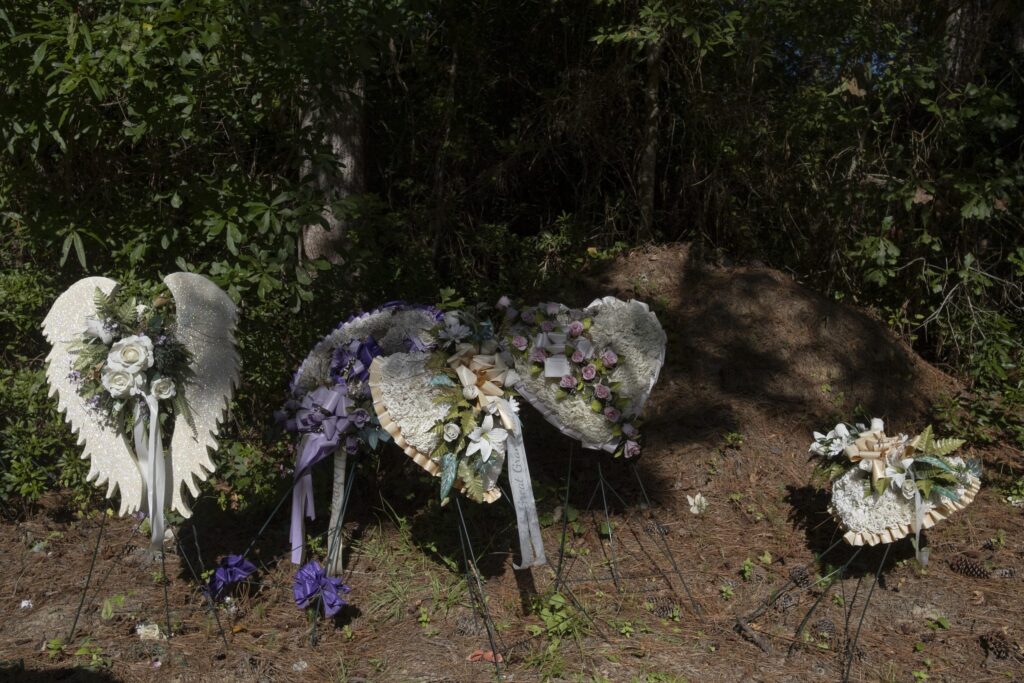
For at least the past decade, issues involving drug busts, overdoses, and addiction have plagued Pamlico County. Between 2017 and 2021, the N.C. Department of Health and Human Services reported that the rate of drug overdose deaths in Pamlico was more than twice the state average of 27.6. In 2024, eight county residents died of an overdose.
During an interview with Down in the County, Pamlico County Sheriff Chris Davis referenced the 2024 data, saying, “A large portion of those overdoses occurred at our prison, and we don't have any control of what goes on at the prison.”
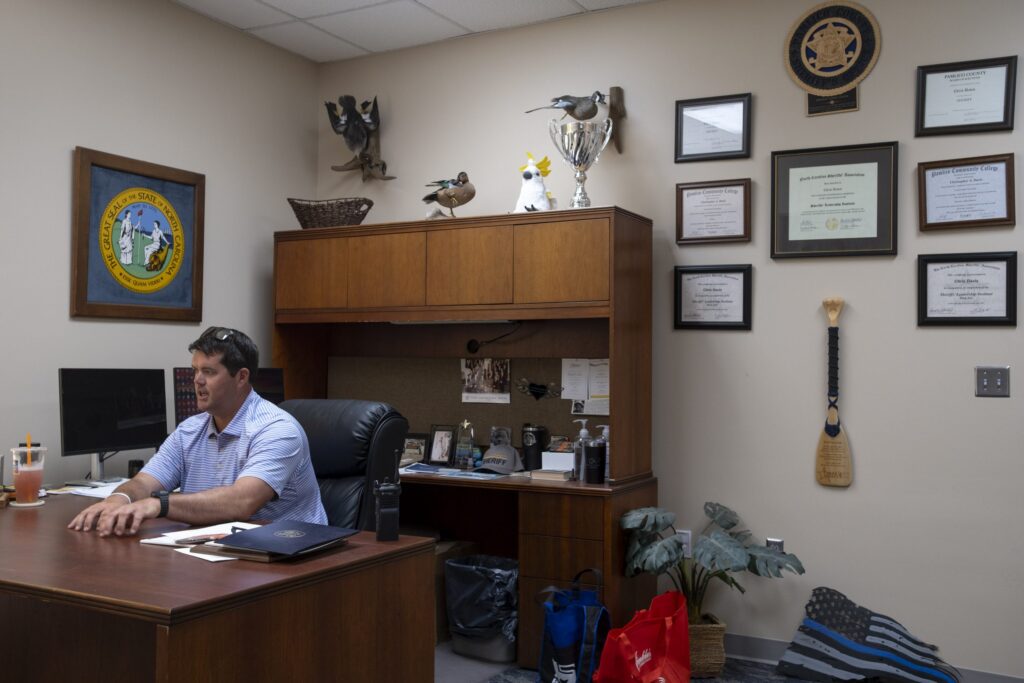
The Pamlico County Sheriff’s Department has turned its attention to the streets, working to curb drug access throughout the county and surrounding areas. In December, as part of the Coastal Drug Task Force — a tri-county N.C. State Bureau of Investigation operation targeting drug trafficking — the Pamlico County Sheriff’s Department executed a raid in which officers seized 128 grams of crack cocaine, 36 grams of cocaine, weapons, and drug paraphernalia.
These raids, along with narcotics crackdowns and investigations into vape shops, are ongoing, and they have made progress in getting harmful substances out of the county. During Davis’ nearly 12 years in office, the department has gained two drug investigators, a drug task force officer, drug canines, and special surveillance equipment to target large drug trafficking operations, he said.
Despite increased efforts by local law enforcement, the cycle of drug trafficking, overdoses and incarceration has continued. County officials cite two issues: addiction and inaccessible care.

Medication-assisted treatment
In June, Down in the County spoke with Dr. Sandhya Montilus, a North Carolina resident who has worked in addiction treatment since 2013. In 2021, she began collaborating on a treatment initiative — Medications for Opioid Use Disorder (MOUD) — to provide medical assistance to those struggling with addiction across the state.
Within community health clinics, mobile care vehicles, and county detention centers, the MOUD program employs trained practitioners and physicians who offer low-cost care to individuals with substance use disorders. Montilus said medications that the MOUD program provides — such as Methadone and Suboxone — help patients recover by decreasing the physical and mental pains of withdrawal.
In severe cases, withdrawal can start by making people antsy and fidgety, Montilus said.
“Then it goes to nausea, vomiting, diarrhea, cold sweats, hot flashes,” she said. “And it’s all happening at the same time. Jerking, twitching … It won’t kill you necessarily, but it’ll make you wish you were dead.”
According to Montilus, medications such as Methadone are “bridges into the world of non-addiction.”
“(They work) on the receptors in the brain, just like your product of choice does,” she said. “The thing is, we know to regulate the use of that, so we can take you off of something that’s an unregulated, terrible drug that's potentially going to kill you.”
The danger in desperation
Montilus isn’t just referring to the threat of a fatal overdose. Fentanyl and other opioids have been found to restrict respiration in regular users, which then leads to other issues.
“It drops their breathing,” she said. “It’s called the respiratory depression that happens with taking an opioid, like fentanyl, or if you overuse your pain medicine … (the) same things will happen.”
This can push users to turn to other substances for relief. “In order for them to not die, what the users have figured out, if they use cocaine or crystal meth … it'll buoy them up to where they don't go into a respiratory depression,” Montilus said. “Now, they're using another highly addictive drug to keep them from dying from the first drug. So a lot of (my patients) will have dual substance disorders.”
“When people make judgments on people who have addictions, I want to caution them: You don't know the feeling of the withdrawal until you yourself have been through it.” — Dr. Sandhya Montilus.
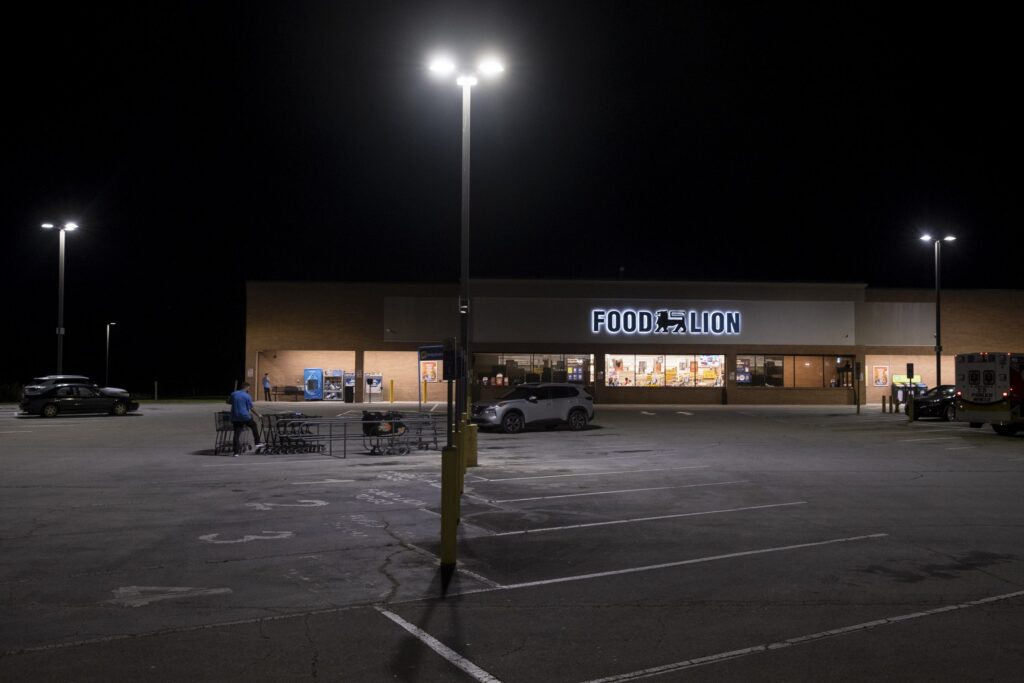
According to Davis, when users begin searching for stronger substances to “buoy” them, overdose becomes inevitable, initiating a “cat and mouse game” that local law enforcement dreads.
“Somebody will overdose… and then several other people are calling, trying to figure out where it (came) from because that's the strongest batch on the street,” he said. “It’s our job to figure out where it came from and try to go get it as quickly as possible because we don't want five or six other overdoses to happen after … that one overdose occurred.”
Finding help in Pamlico

As of June, 57 of North Carolina’s 100 counties had some form of MOUD service available. Pamlico County is not among those 57.
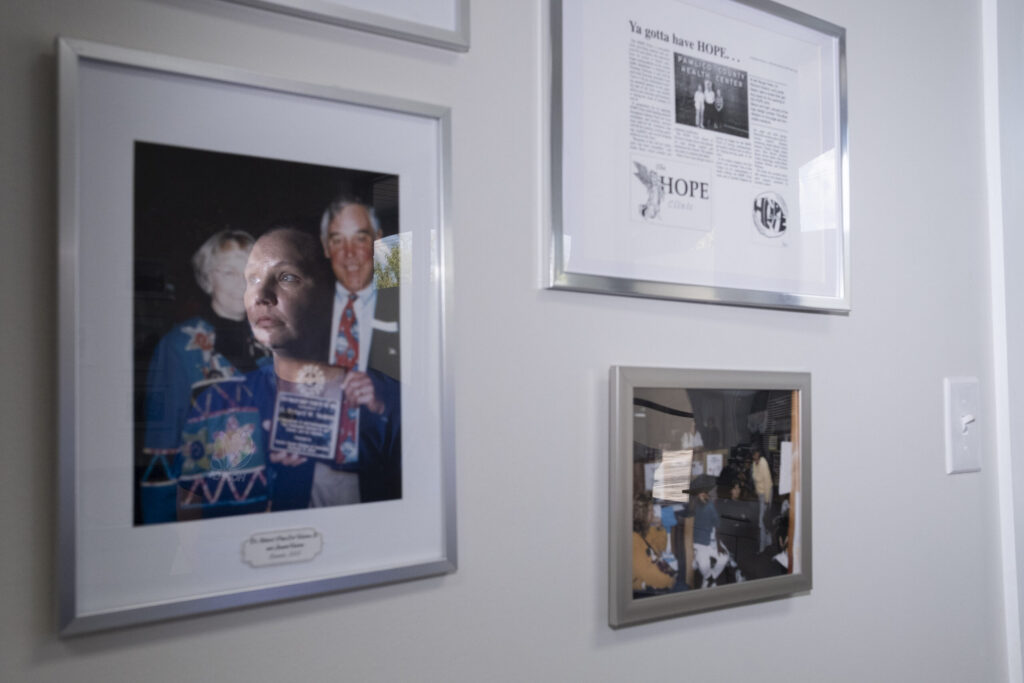
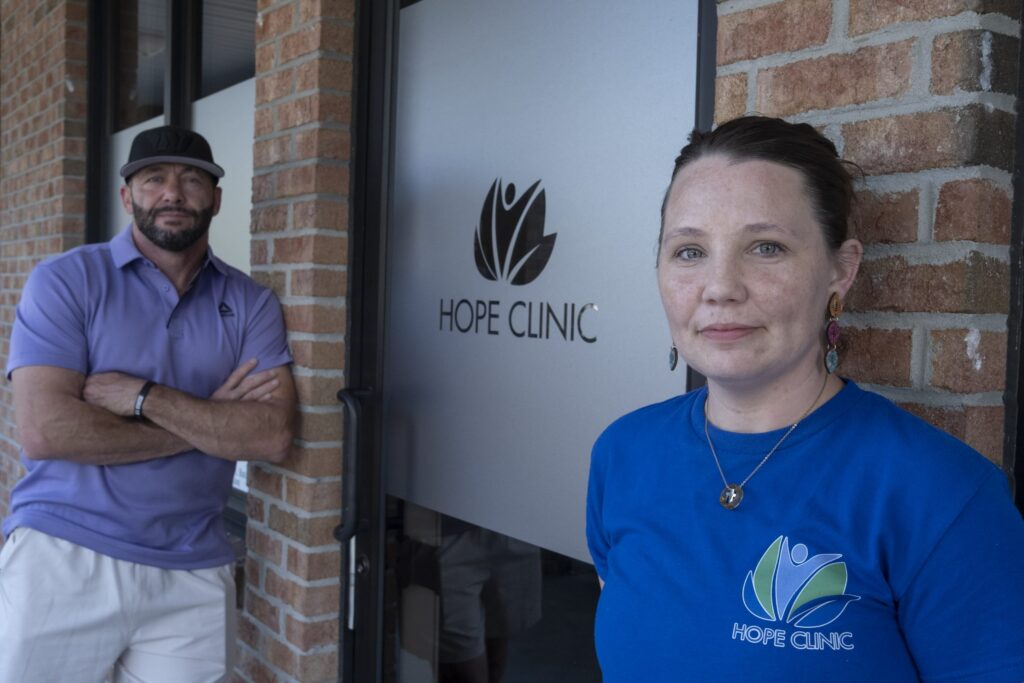
Instead, its nonprofits and volunteers have been providing free support services at multiple locations in the area. The Hope Clinic, a health center serving the uninsured and underinsured, initiated the New Beginnings program in 2017 specifically for patients struggling with substance use disorder.
Through this program, Pamlico residents are connected with a certified alcohol and substance use counselor, a peer support specialist, and a nearby detox facility where they can access medication.
To cover treatment costs at these facilities, the Hope Clinic works with Trillium Health, which uses public funds and donations to provide care. Lindsey Potter, a New Beginnings substance use counselor who is also in recovery, said these connections outside the county “remain a lifeline.”
Clinics such as Walter B. Jones Alcohol and Drug Abuse Treatment Center in Greenville and PORT Health in New Bern have been crucial in providing New Beginnings patients with “vital paths (toward) recovery,” Potter said.
However, accessing these facilities, which can be nearly two hours outside the county, presents a “significant barrier,” Potter said. What’s more, when patients are no longer within the care of a detox facility, the costs of treatment cannot be covered by a local management entity such as Trillium, forcing many to seek other forms of financial assistance.
“Even when we successfully forge a path to treatment, the obstacles, including costs and travel logistics, can still prevent people from accessing the care they need,” Potter said.
The treatment process
As someone who had to seek treatment outside the county, Potter attests to the challenges of receiving frequent, intensive care far from home.
“I went to … a place that was in Craven County that had an MOUD intensive outpatient program, which means you spend up to nine hours a week engaged in outpatient … group counseling, and meeting with your doctor as well,” Potter said. “You receive your medication — I was on methadone — in front of them. You have to go every day, and they administer and make sure that you actually took the medication.”
MOUD treatment was essential in kickstarting Potter’s recovery. Through regular check-ups, practitioners examined Potter holistically. What they found were chronic mental and autoimmune disorders that had been worsening the impact of her withdrawal symptoms. In addition to the medication, therapy and group counseling allowed Potter to stay “consistent,” she said.
Roadblocks

Getting to appointments was a huge hassle. “I was young. I was 19. I didn't have a vehicle. I didn't have a license,” Potter said. “We didn't have … transportation that comes down and brings people there … so that was a barrier.”
Potter said participants in her program relied on each other.
“I was just blessed to be able to (make) friends with people that went to the same program as me,” she said. “We helped each other by taking turns riding with each other … until others got — well, the ones of us without a car — got one and could return the favor.”
The back-and-forth trips to Craven County went on for about a year, Potter said, before she was able to bring medications home and self-administer. Even then, she was still making trips to the clinic once a week.
Potter’s Medicaid coverage and carpool system allowed her to get treatment. Without insurance or access to other transportation, the care would have been unattainable.
“It was just not in the county I lived in, and I didn't have transportation,” she said. “If it (wasn’t) for Medicaid ... I wouldn't have been able to afford any of that because that … nine hours of intensive therapies and engagement a week plus medications … that's a lot of money.”
Maintaining sobriety
With so many hurdles, maintaining sobriety and stability can feel impossible. Both Potter and Montilus said that even those far along in the recovery process may relapse when therapy is no longer accessible.
“If you don’t continue with therapy long after you come off your medication, the chances of you going back are going to be that much worse,” Montilus said.
Even after clients are no longer using drugs, losses and devastating life events can push them to a breaking point. For example, those who’ve become stable on medication often face job insecurity due to the stigma around addiction treatment.
Although “you cannot fire somebody because they’re on drug treatment,” Montilus said, “in North Carolina, you can let people go with no excuse. … You don’t have to have a reason.”
If employers find out that an individual is receiving addiction treatment, they may deem the employee unstable. A person could suddenly be told, “Sorry, we no longer need you,” and face unemployment.
Without therapy to avoid temptations — mentally and physically — individuals can end up right back where they started, Potter said.

Treatment they deserve
Accessible MOUD service is a necessity, Potter said.
“There’s many people that are losing their lives because they can't make it out of town on a daily basis and pay hundreds of dollars to … get the effective treatment they deserve,” she said. “If (MOUD treatment) was here in Pamlico, we could … prevent losses of lives … because (there are) many people who would go if they could.”
With fundraising and a partnership between existing healthcare facilities in Pamlico County, opening a local MOUD clinic is possible, Potter said.
“It's just a matter of … people coming together, companies coming together and someone willing to put their boots on the ground and saying this is an issue,” she said.
There are grants for as much as $100,000 from the Substance Abuse and Mental Health Services Administration to address opiate use disorder, Potter said. “You can … say, ‘Hey, I wanna offer this in Pamlico for opiate use disorder.,’ And you could get the money for a start-up if you apply now.”
However, juggling legalities and high demand could cause delays. Requirements include certain licenses, a director to sign off on distributed medications, and fees paid before treatment could be offered.
Still, the dire need makes efforts to provide assistance worthwhile, Potter said.
“I tried every path there was at least once. … They all serve their purpose. We may all have addiction in common, but we are all different. Our journey is unique, and our health factors are unique. That's why it's so important to have all the options available to us for recovery, not just one, because one way doesn't fit all of us.” — Lindsey Potter
County history with MOUD
The Hope Clinic has been a dependable resource for those with addiction in Pamlico County. In fact, Davis said that several years ago, when grant-funded MOUD and detox services were available at the local detention center — for those serving sentences of 90 days or fewer — the Hope Clinic was a key resource for inmates after their release.
The grant funding for treatment programs at the detention center has not been renewed, ending any medication services available within the county. Davis said that these circumstances are largely outside the control of county leadership, and cited logistical issues with providing adequate care at the detention center.
“We can start the process while they're in jail,” he said. ”But for the majority of these folks, they're only here for … a week, and then they're right back out.”
With a limited timeframe, providing the comprehensive treatment Potter received, for example, would be impossible. For now, Davis said, law enforcement can refer released inmates to other avenues for recovery and hope for the best. “What we provide them is the resources,” he said. “So when they get out of jail, they have some way of going and getting help.”
It’s personal
Beyond the lack of funding, time, and resources available to offer MOUD treatment in the county, Davis expressed hesitancy about providing such potent medication to those seeking treatment. “We're replacing fentanyl and heroin with (drugs that are) just as addictive,” he said. “So now we've got people out here that we, as the government said, we're here to help, but in return, we've just got (them) addicted to a different drug. We have to be very careful in what we (promote).”
Nevertheless, Davis made clear that the county’s drug problem isn’t just about statistics. For him, it’s personal.
“I've got a brother and a sister that were addicted to drugs at one point,” he said. “I've got a brother right now that's in prison because of drugs. I know how … a mother and a father feel when they haven't talked to their kid in three days because their kid’s in some drug house somewhere. I know how (it) feels when your brother or sister … refuses to admit that they have a problem because they're addicted to these drugs. I want to see drugs cleaned up in this community and in this county … because I know the effects that it has on families.”

Next steps
Because of grant-funding complications, logistical issues, and treatment controversies, Pamlico residents with addiction are lacking access to adequate care. As the Hope Clinic, the county’s best addiction treatment resource, struggles with limited finances and volunteers, the question remains: How can help finally be made accessible?
For MOUD, options include partnering with an existing clinic, building a new clinic through grant funding and community volunteer work, or collaborating with the county jail. Donations can be made to Hope Clinic online, by mail, over the phone, or through the Zelle app. Volunteers are always needed, and open positions can be found on their site: hopeclinic.net/support-us
Community collaboration and persistence would go a long way toward easing longstanding drug issues.
“We shouldn't have to leave home to go get help and healthcare.” — Lindsey Potter