Places like Brown’s served as a gathering spot for the community
Photos and Story by Bill Hand
Before the rise of chain grocery stores and Walmarts, mom and pop general stores dotted the landscape the way Dollar Generals do today. Now, country stores are primarily memories in the hearts of a generation.
The stores evoked images of bearded men in rocking chairs, sometimes holding a jug of Appalachian-style brew, staring at a camera from a wood-slat porch and, behind them, metal signs promoting Coca-Cola, oil or soap.
Pamlico County was home to dozens of such stores, primarily run by husbands and wives, and often by moonlighting farmers.
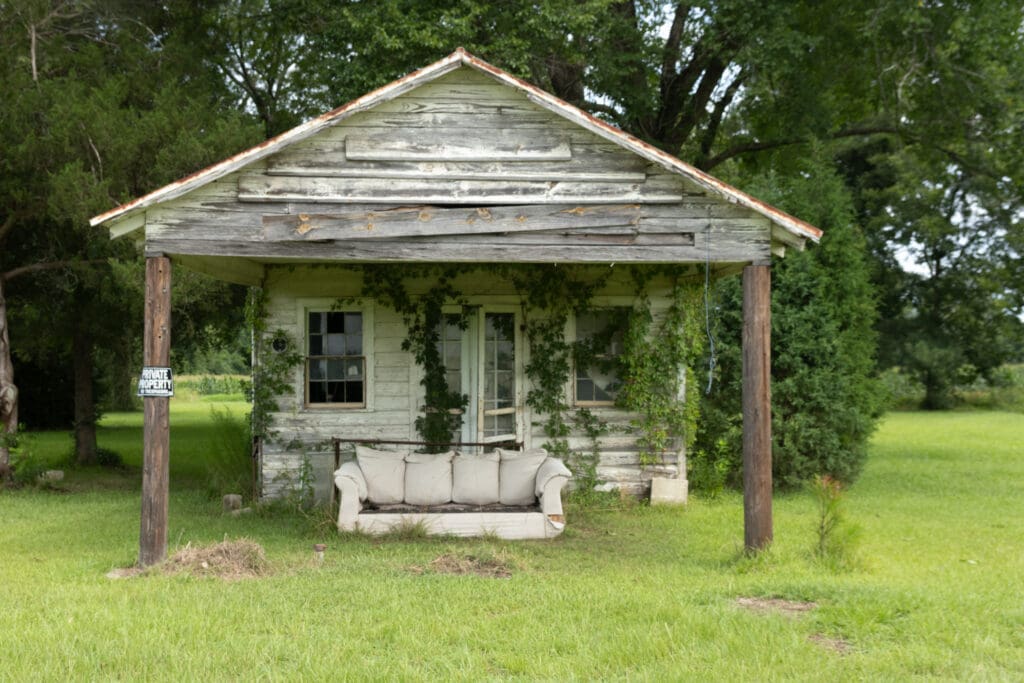
One structure stands as a reminder of those long-ago businesses: Brown’s Store on Scott’s Store Road just outside Bayboro.
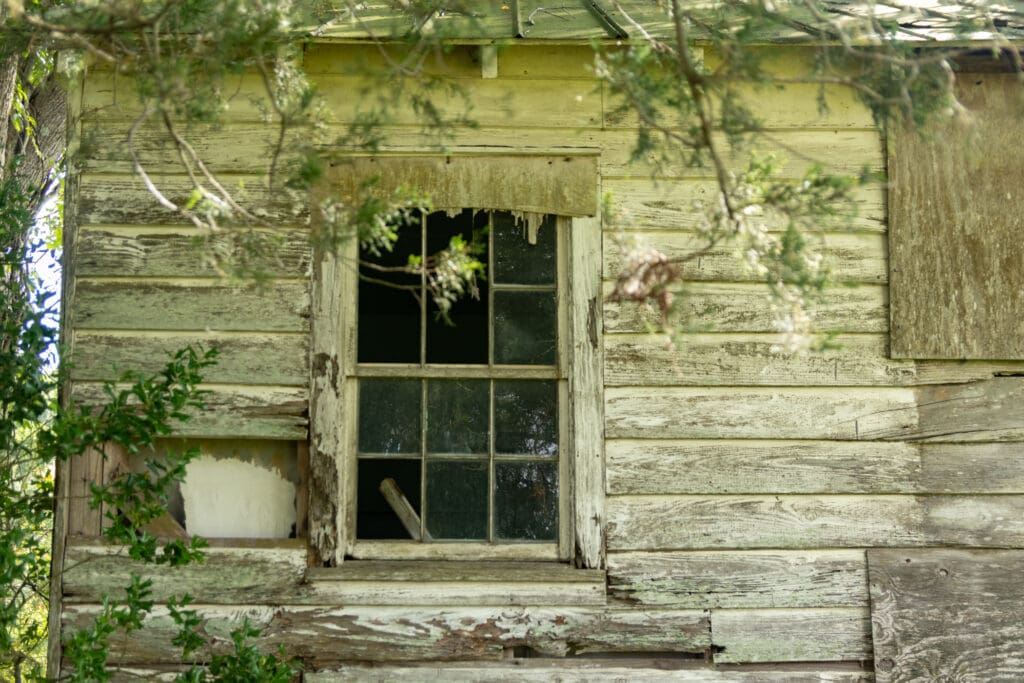
After years of neglect, it is a shadow of its past — empty, unpainted and with a few boards hanging at angles on its siding. But, surprisingly, some things are in good condition: The windows are unbroken and the yard is kept clean and trimmed. Additional buildings, such as a house and a barn, are gone.
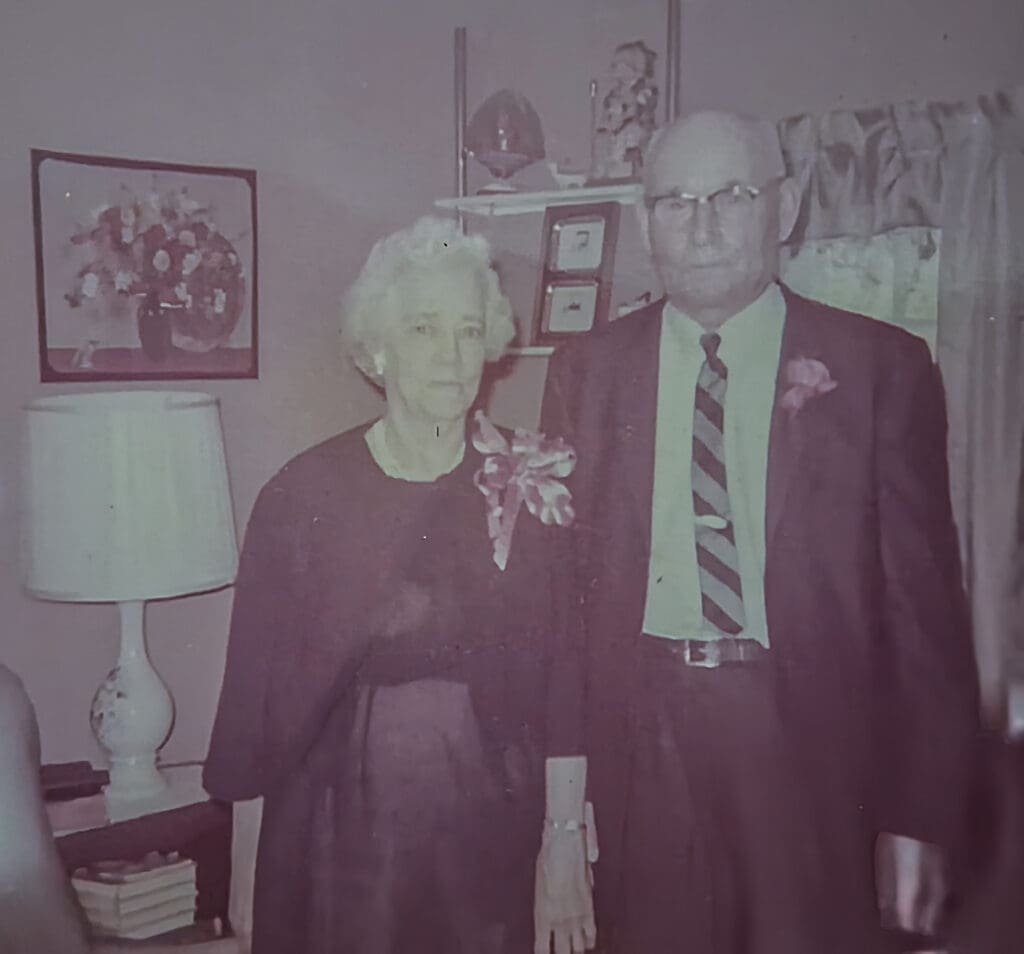
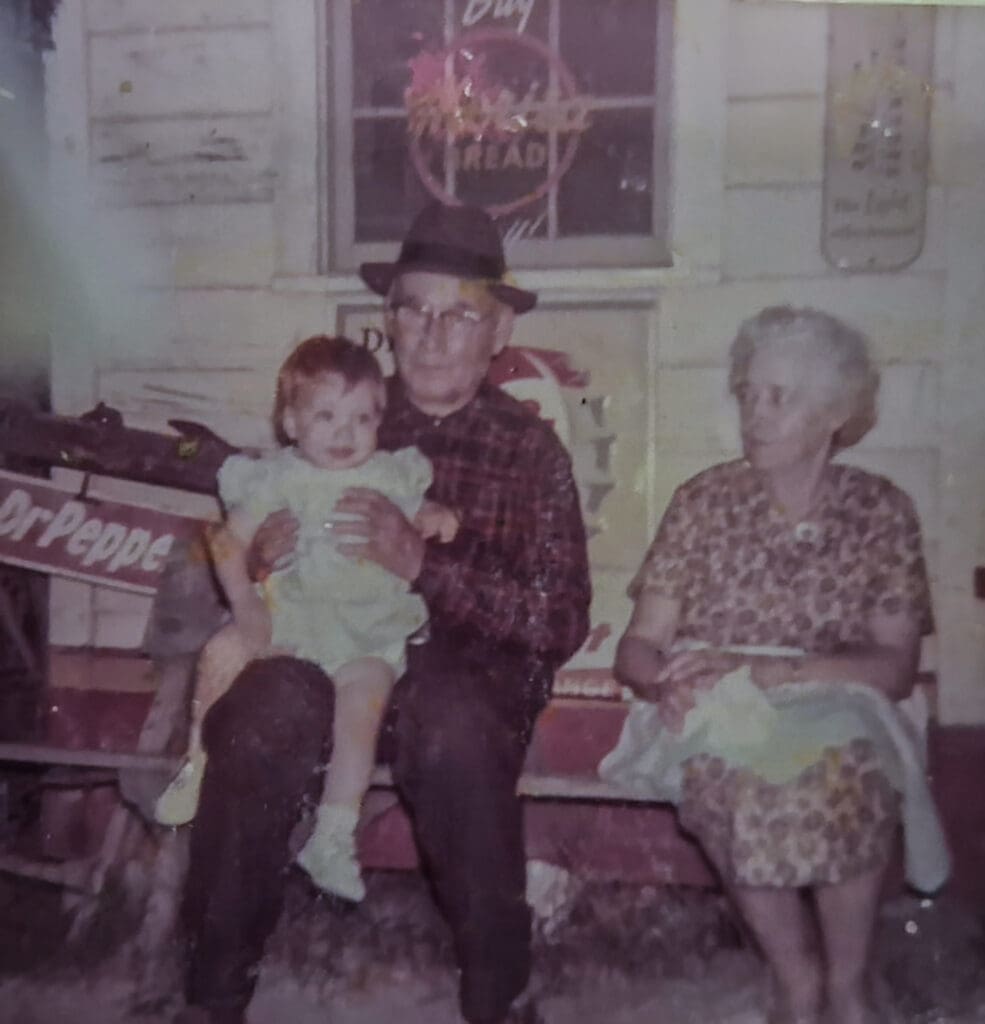
The little store was bought in 1946 by Hymric “Jeff” Brown and his wife, Leona.
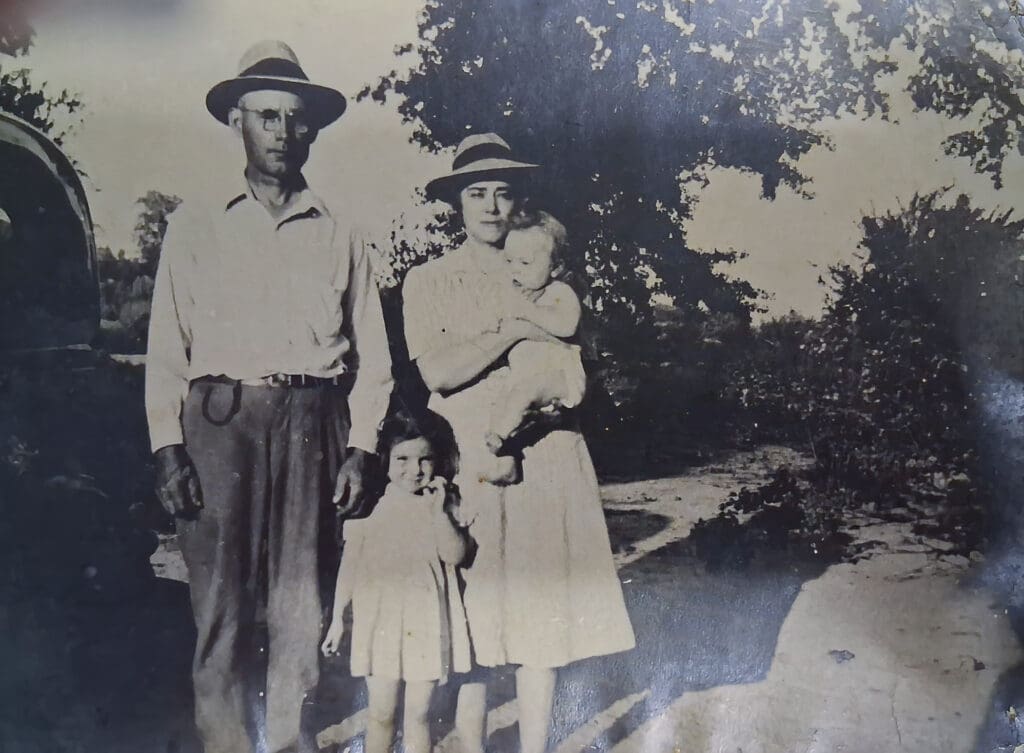
The Browns were in their 50s when they bought the store. Jeff was born in 1892, the youngest of seven children, and Leona was born in 1897. Their granddaughter, Peggy Pittman, said Jeff sold pigs in partnership with her father. “Grandaddy did the work, and Daddy paid the feed,” she said.
“It was like other country stores of that era,” Pittman said. “It was a meeting place.”
People sat and passed around a bottle of Coke with peanuts mixed in; they shared news and gossip, and watched the traffic go by.
Country stores were just about everywhere in the county and while you could pick up a loaf of bread or a snack at any of them, each one had a specialty to cater to locals’ needs.
Pamlico historian Merritt Watson said every community had such a store.
“There were four in Lowland when I grew up there,” he said.
The community thrived on fishing and farming.
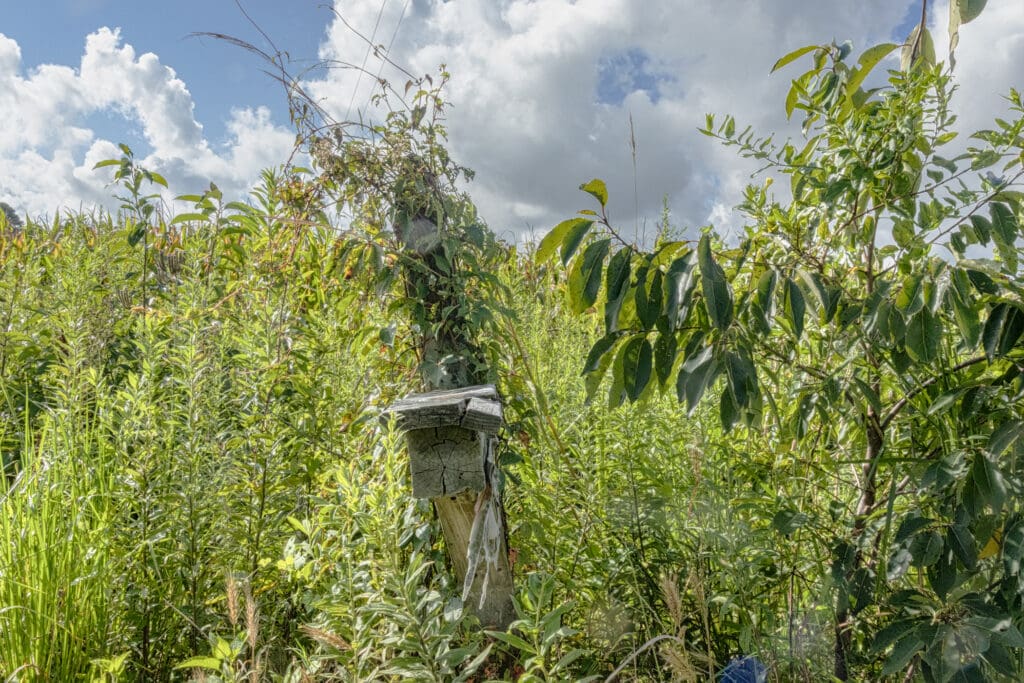
“Ruby Sadler’s store in Lowland — if you wanted to get fresh meat, that’s where you went to get it,” Watson said. “You could buy such items as clothes, drugs and perfumes. You buy your staples there. And there were two gas pumps out front.”
The stores frequently operated on the barter system, he said.
“You’ve got eggs, or you brought in live chickens,” Watson said, remembering his childhood. “They would put them in a cage and sell them to someone who wanted fried chicken for dinner.”
The barter system “thrived right up until some of these stores closed,” he said.
Then there was Fred and Pearl Lewis’ store across the road from Sadlers, where fabric was a specialty.
“Across the road from them was Mr. Howard’s store,” Watson said. “He specialized in things like hardware. Nuts and bolts and things like that.”
“Down the road was Mr. Lupton’s store. He carried some staples,” and had a pool table, Watson said. “It was a favorite hangout for us boys.”
Pittman said Brown’s store was typical. It had groceries. “There may be a hammer or something like that since it had farmers coming in,” she said.
She also recalled “little displays with makeup and hairspray.” Everything seemed cheap, and at the end of the school day buses would drop kids off and they would hang out at the store, often sitting on a couch or the back seat removed from a car and set up out front.
Pittman said neighbors would hang out at Brown’s store. “We knew the Scotts who were on the Grantsboro side of the store and down the road in front of the house, just a few feet in front of the store, there was a little road and Mr. and Mrs. Lee lived back there,” Pittman said. “That land toward where the Lees lived was the blackest dirt that I had ever seen.”
While it stands alone on its lot today, Brown’s used to be one of a cluster of buildings. Pittman remembered a two-seater outhouse with a concrete stool and a wooden seat, “the only fancy outdoor toilet I’ve ever seen.”
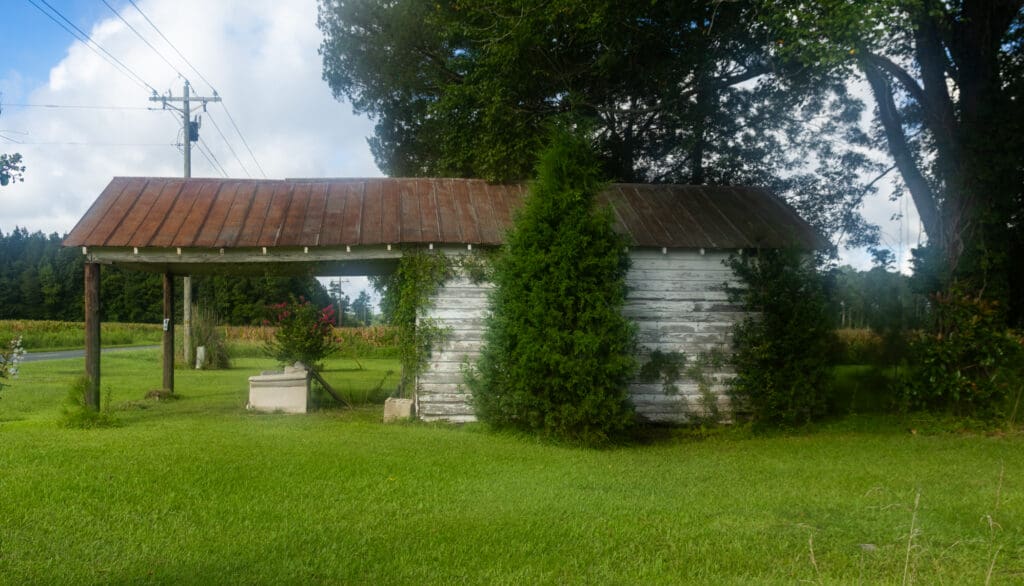
“There was a house,” Pittman said, and “as you drive up to the store, there was a driveway to the left-hand side of the store, which went to the house, which was just a few feet to the back of the store.”
The family home, with a screened-in porch sat on the lot and community picnics were regularly held there. There was also a barn that eventually burned down, and “the house just fell to the ages,” she said.
Pittman has fond memories of the Browns, especially of Leona.
“She was the business person; she was the business head,” Pittman said. Long after her grandmother’s death in 1966, Pittman said she “found a paper bag full of bank statements” in the family barn.
“In a day when women didn’t matter, when they couldn’t do anything without the permission of their husband, my grandmother had her own bank account,” she said. “I don’t know where she got the money, unless it was from selling eggs.”
Those statements were from the ’30s, before the Browns lived in Pamlico, and Pittman cherishes the thought of them. Years later, Pittman wanted to show those statements to her daughters but found they had completely disintegrated from age. “I could only tell them” about it, she said.
Leona was a serious woman, “but she enjoyed a good joke,” Pittman said. “She was something else! When they moved into that house (beside the store), certain things were agreed upon, and if they didn’t get done according to her timeline! I remember hearing the phrase, ‘Jeff, you didn’t build the kitchen cabinets you promised, so I’m gonna do it.’
“I remember walking into their kitchen,” she said. “If I turned to the left, I was looking toward Scott’s store. There were cabinets that went almost all the way to the ceiling that were built out of tongue and groove lumber, and she built those cabinets so she’d have room for her stuff.”
She remembered Jeff as being laid back and sociable, a kind man who didn’t have his wife’s business sense. When she died, he continued to run the store until his own death in 1974.
After Leona’s death, Jeff married Minnie Dixon, a woman known for her baking talent. It was during this time that a high school girl — now Brenda Parsons — befriended him.
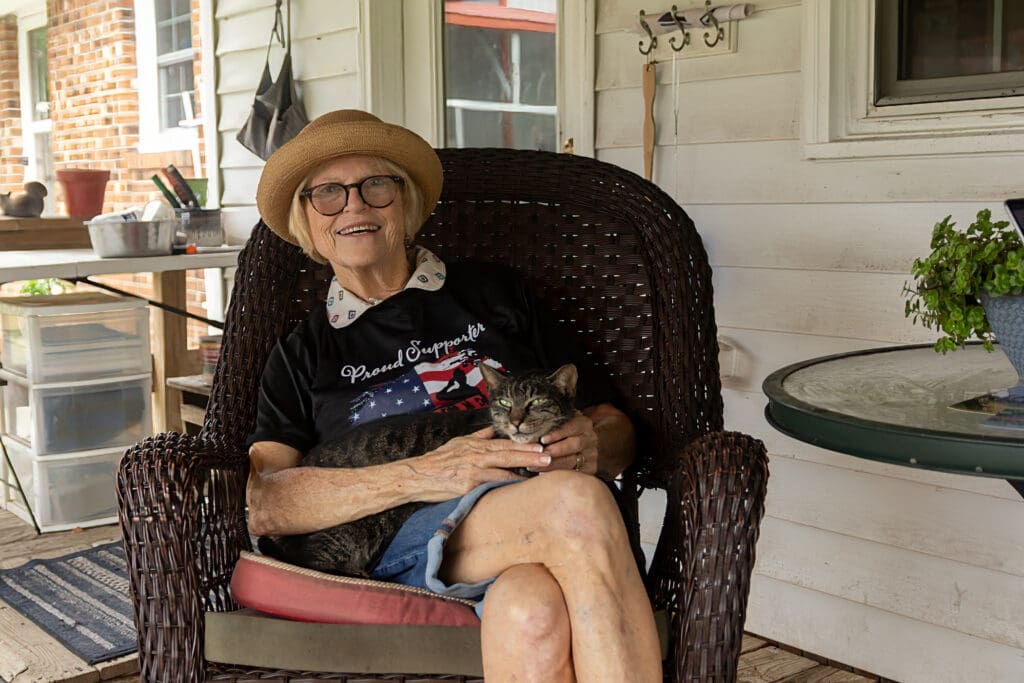
“Mama would fix a supper and she would fix him a plate,” Parsons said. “I didn’t have a license but he was only a mile away,” so her family let her drive to the store.
Soon Parsons was helping at the store, sweeping floors and closing the store at the end of the day. “He would say, if there were any 50 cent pieces in there, keep them,” she said. She collected them in “one of those old-timey piggy banks.”
“What I remember about Mr. Brown is he would lay out his store and all the farmers would come,” she said.
Parsons grew close with Brown. “I had so much fun with him,” she said.
He taught her to drive and she became a kind of valet, taking him to favorite barbecue hangouts. “Mr. Brown’s old car — when I finally got my license, he wanted me to take him to Ayden, where he was from,” Parsons said. “That was good with me.”
In fact, Brown gave her the car. There was something else Parsons got with help from the Browns: her husband, Bill.
“It was over lemon pie that we met,” she said of her future husband. They had Minnie’s lemon pie together during one of the many community picnics that were held at the Brown home. “They would have dinners out in the yard and they had a screened porch,” she recalled. “The men would sit around on the porch.” And the young women would study them.
Bill Parsons “had the sideburns and the hair that was greasy — slicked back, that style,” she said. She had a second car now, a used Pinto, and “I just wanted to show it to him.”
One thing led to another and they got married in 1972. Brown died on March 1, 1974, at the age of 81, just a month after 75-year-old Minnie died on Feb. 1. Brown’s Store closed soon after.
Other country stores also closed following family deaths and, ultimately, they disappeared from the landscape, pushed out by big box stores such as Food Lion, where no one exchanges live chickens for a roast. And the internet altered the tradition of neighbors just gathering to chat.
Sometimes retired folks still get together to chew the fat in the early mornings. In Bayboro, they do it at Bojangles.
In a way, Watson said, there is a living shadow of the old country store — though it lacks the charm and neighborliness of places like Brown’s.
“All these Dollar Generals, all over the place,” he said, “they are the closest thing (left) to the old country stores.”
But they are not the kind of gathering places that once knit together a community.